Which professions can share an office or care space
Sharing an office between care and wellbeing practitioners is an efficient, increasingly popular model. But not all professions are equally suited. Success depends on complementarity of services, compatibility of schedules and respect for confidentiality.
What makes professions compatible in a shared space
The best shared spaces bring together complementary practitioners: psychologist alongside osteopath, dietitian near naturopath. Three criteria matter:
- Complementarity: services that complement, not duplicate
- Schedule diversity: different peak hours for better utilisation
- Shared values: a common standard of professionalism
Schedule compatibility: a key factor
Different professions have different peak periods. This natural diversity means the space is well used throughout the week. A single office can serve two or three practitioners on different schedules.
Confidentiality: a non-negotiable requirement
Effective acoustic insulation between offices, discreet waiting areas, staggered appointments, and clear physical boundaries. A well-designed space addresses these needs structurally.
The atmosphere of the space
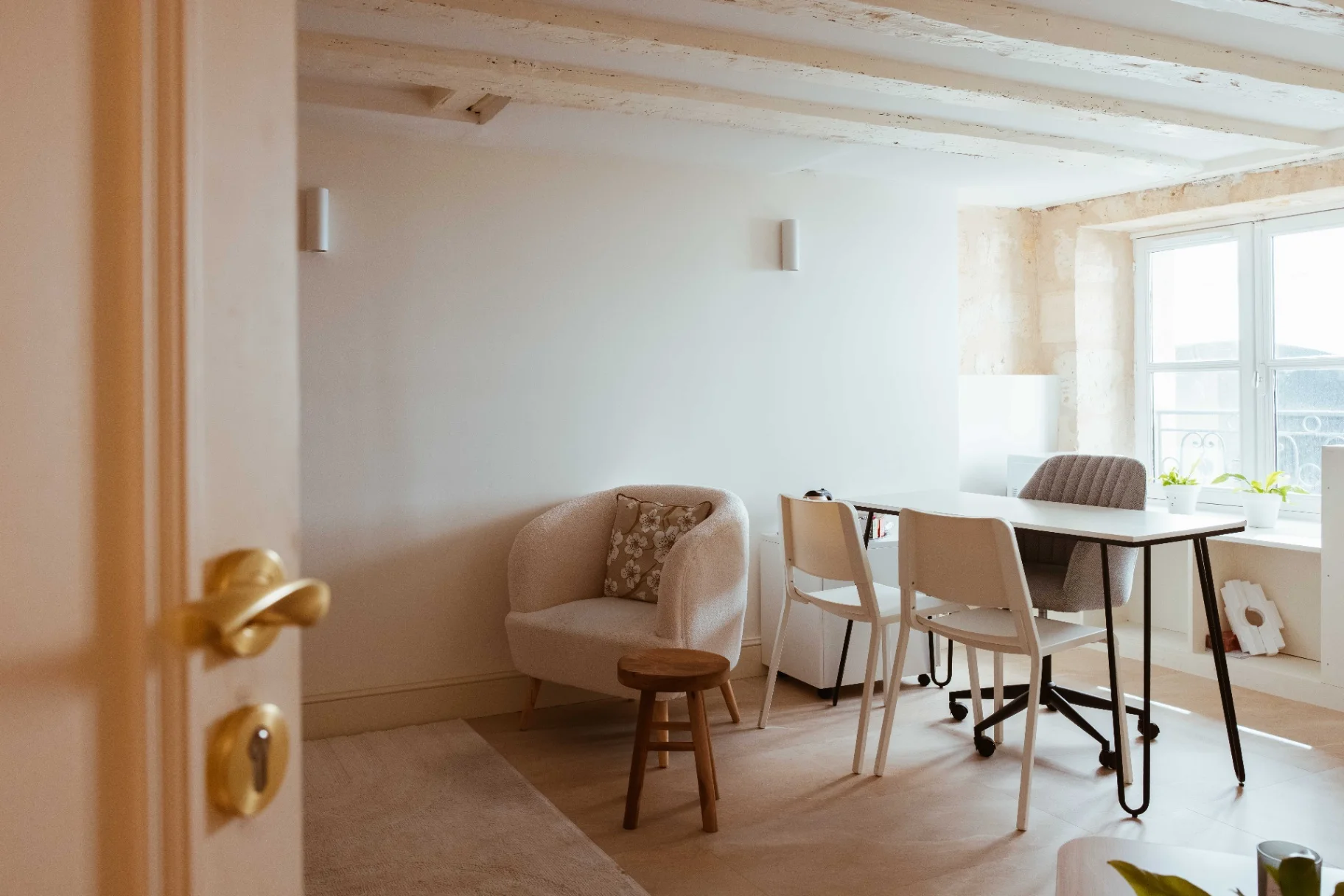
A calm, professional atmosphere is a shared asset. Quality finishes, a clean waiting area, appropriate lighting, this standard is easier to achieve collectively.
Shared areas: the quality multiplier
A well-maintained waiting room, accessible facilities and quality signage enhance every practitioner's image. Shared areas also reduce administrative burden.
Professions well suited to shared offices of 11 to 18 sqm
Mental health and talking therapies
- Psychologists and psychotherapists (11 to 13 sqm)
- Sexologists (11 to 13 sqm)
- Counsellors and mediators (11 to 13 sqm)
Manual and body-based therapies
- Osteopaths (14 to 18 sqm)
- Sophrologists (11 to 14 sqm)
- Reflexologists (12 to 15 sqm)
Nutrition and lifestyle
- Dietitians and nutritionists (11 to 14 sqm)
- Naturopaths (11 to 14 sqm)
Rehabilitation and development
- Speech therapists (12 to 16 sqm)
- Occupational therapists (13 to 16 sqm)
- Psychomotor therapists (13 to 16 sqm)
Note: professions requiring very large areas or heavy equipment are generally not suited to this model.
Common mistakes to avoid
- Sharing with a directly competing practitioner
- Neglecting acoustic insulation, confidentiality failures damage trust
- Assuming schedules will align without explicit agreements
- Ignoring the overall atmosphere and quality standards
- Joining without clear rules on cleaning, maintenance and bookings
Frequently asked questions
Every set-up project depends on your activity, budget and how much you want to share. The simplest step is often to compare your needs with a space that's already designed for care.
Looking for an office in Bordeaux?
Discover I‑CA.RE spaces and let's discuss your project.
The I‑CA.RE approach
I‑CA.RE develops and structures care spaces tailored to care, allied health and wellbeing practitioners. Each space is designed with particular attention to quality, functionality, local integration and economic coherence of use.