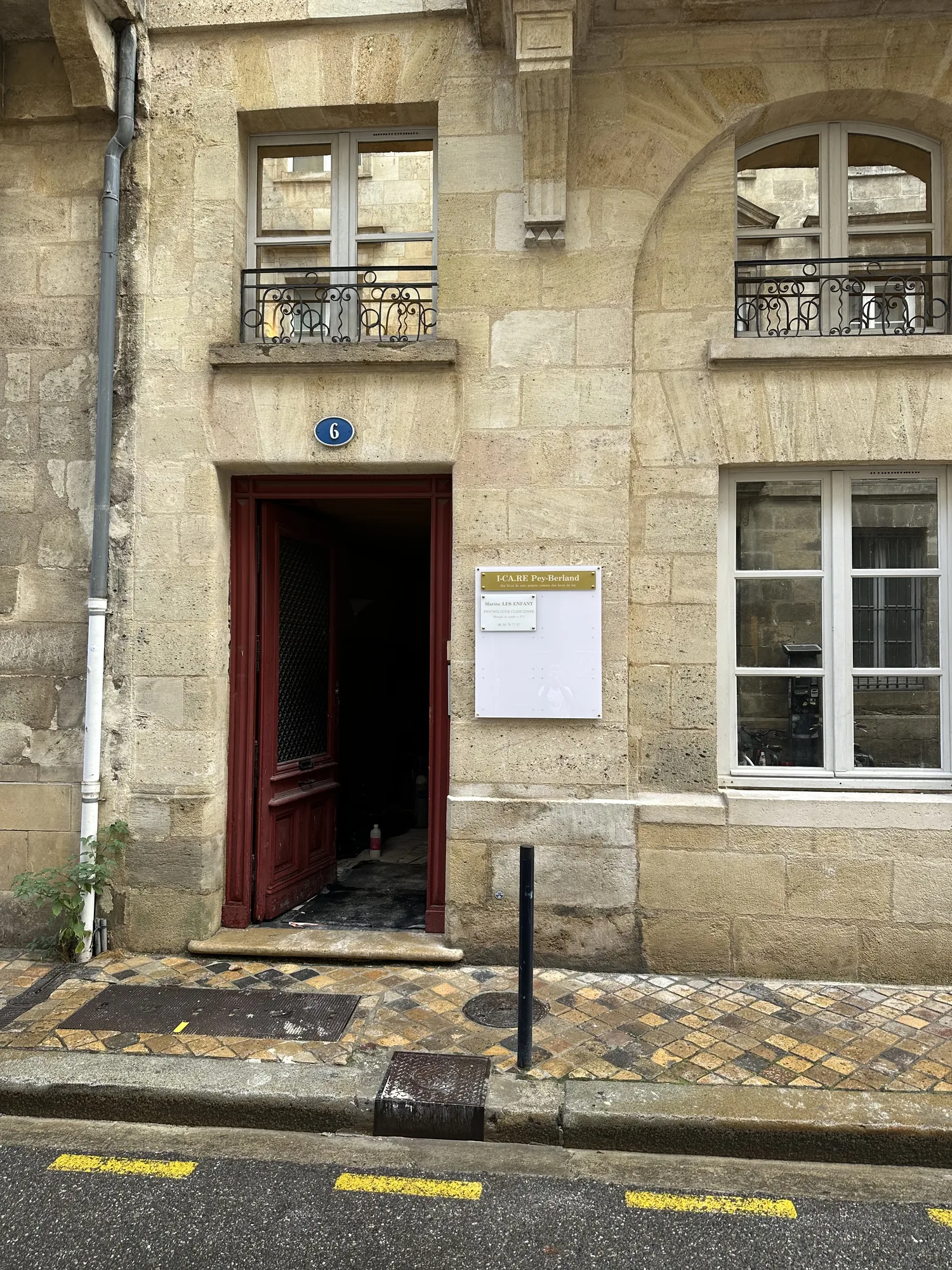
How to find a medical or paramedical office in Bordeaux
Finding the right office in Bordeaux is a challenge many practitioners face. The market is tight for small spaces suited to healthcare and wellbeing professions, and the available options are not always visible or easy to evaluate. Location, size, regulatory compliance and overall budget must all be considered together, not in isolation.
Why the market is tight in Bordeaux
Bordeaux has seen sustained demand for small healthcare-suitable spaces. Units between 10 and 25 sqm are rare on the open market, and many existing premises require significant work to meet current standards, particularly accessibility and acoustic insulation.
Most traditional commercial listings target retail or office use, not healthcare. This creates a gap: practitioners need purpose-fitted spaces, but the supply of ready-to-use offices is limited.
What makes a good location for a healthcare office
A good location must be consistent with your activity. A busy high street is not always the best fit. For many practitioners, proximity to other health professionals, public transport, residential areas or complementary services matters more than footfall.
Consider ground-floor visibility, ease of access (parking, tram), signage possibilities and the general neighbourhood atmosphere. A calm, professional environment often suits healthcare better than a commercial one.
How much space do you actually need
The ideal private office for most seated-practice professions is between 11 and 15 sqm. Professions requiring a treatment table or specific equipment may need 15 to 18 sqm. Access to shared common areas significantly reduces the individual space required.
A well-optimised 13 sqm office with access to quality shared spaces can be more effective than a poorly laid-out 30 sqm standalone space.
Accessibility and ERP standards
Any premises receiving the public must comply with ERP accessibility standards. This includes wheelchair access, adapted facilities, appropriate signage and compliant door widths. A non-compliant space can generate significant renovation costs.
Always check compliance before signing. Derogations exist for certain existing buildings, but the process takes time and is not guaranteed.
What budget to plan
The overall budget goes well beyond rent. Factor in deposit, renovation work, furniture, signage, insurance, charges and a cash reserve.
- Monthly rent: €400 to €900 for a small office
- Renovation costs: €500 to €1,500/sqm depending on condition
- Furniture and signage: €2,500 to €7,000
These figures are indicative and vary by location, condition and type of premises.
Common mistakes to avoid
- Choosing a space based on impulse without checking regulatory compliance
- Underestimating renovation costs, especially ERP and acoustic upgrades
- Oversizing the space and paying for unused square metres
- Signing a lease before verifying the designated use
- Neglecting to plan a cash reserve for the first months
- Dismissing shared spaces without exploring the actual offering
A structured approach makes the difference
Preparing your search methodically (defining your needs, setting a realistic budget, visiting multiple options and checking all regulatory aspects), avoids the most common pitfalls. A well-prepared practitioner makes better decisions and secures a more sustainable set-up.
Frequently asked questions
Every set-up project depends on your activity, budget and how much you want to share. The simplest step is often to compare your needs with a space that's already designed for care.
Looking for an office in Bordeaux?
Discover I‑CA.RE spaces and let's discuss your project.
The I‑CA.RE approach
I‑CA.RE develops and structures care spaces tailored to care, allied health and wellbeing practitioners. Each space is designed with particular attention to quality, functionality, local integration and economic coherence of use.